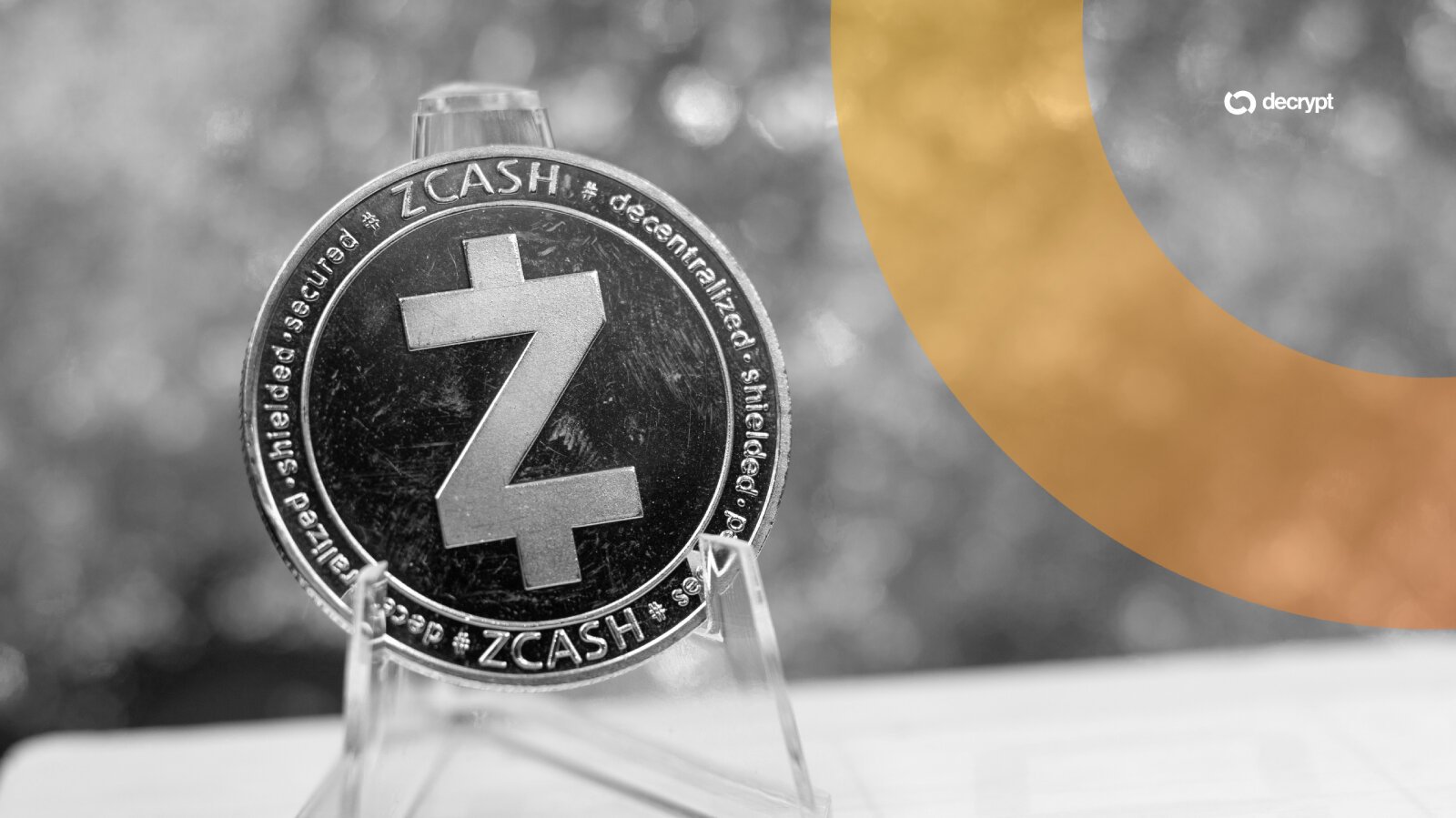
Privacy Coins ZCash, Monero, Dash Drop as 'Safe Haven' Narrative Fades
A sharp market downturn sees leading privacy assets tumbling in tandem with Bitcoin, signaling a pivotal shift in their role from isolated hedges to high-beta altcoins governed by broader crypto macro forces.
Introduction: The Privacy Coin Pullback
The cryptocurrency market is experiencing a broad-based rout, and a once-resilient sector is falling sharply in line. Leading privacy-focused digital assets, including ZCash (ZEC), Monero (XMR), and Dash (DASH), have seen significant declines, erasing gains that defied the broader market trend just months prior. According to data from CoinGecko, ZCash is down 8.5% over the past 24 hours, Monero has fallen 5.4%, and Dash has shed 3.9%. The privacy coins sector as a whole has dropped by 15.4%.
This parallel decline with major assets like Bitcoin reflects a significant shift in market dynamics for these tokens. Analysts point to the fading of the "safe haven" narrative that previously propelled privacy coins during periods of uncertainty. Instead, they are now trading as speculative instruments highly correlated with the rest of the crypto market.
The End of an Isolated Narrative
The recent downturn marks a stark reversal for privacy coins, which saw explosive, market-defying rallies throughout the fourth quarter of the previous year. The narrative that positioned them as uncorrelated hedges against regulatory scrutiny or market volatility has dissipated.
Slava Demchuk, CEO of AMLBot, told Decrypt that the safe haven narrative "broke in December as the market priced in reality." He highlighted a critical flaw in the thesis for some assets: "For coins like ZCash and Dash, most on-chain volume remains transparent. They trade as speculative narratives, not utility tools, causing them to drop like standard high-beta altcoins."
This new dynamic means privacy assets are now governed by the same macro forces as the rest of the cryptocurrency ecosystem. Jamie Elkaleh, CMO at Bitget Wallet, explained this shift to Decrypt: "With the introduction of ETFs and significant capital inflows, ETF positioning and monetary policy expectations increasingly dictate crypto market direction. Privacy assets are behaving less like isolated hedges and more like high-beta components of the broader ecosystem."
Historical Drivers: What Fuels Privacy Coin Demand?
Despite the current pullback, the fundamental drivers for privacy-enhancing cryptocurrency technology remain potent. Historically, major rallies in this sector have been fueled by a confluence of three specific factors, as outlined by Demchuk.
The first is technological advancement in cryptographic privacy. Breakthroughs in zero-knowledge proofs, ring signatures, and mixing protocols have periodically renewed interest and confidence in these networks' capabilities.
The second driver is political and regulatory pressure. Initiatives like the European Union's controversial 'chat control' proposal and legislative moves to ban anonymous cryptocurrency accounts have repeatedly spiked demand. This dynamic was observed as recently as October, driving interest toward coins like ZCash.
The third factor is genuine risk-based demand. In jurisdictions with political instability, financial surveillance, or capital controls, the transparent nature of public ledgers like Bitcoin's can pose real-world risks to users and businesses. Privacy coins offer a technological solution to this problem.
"The more pressure you apply, the more valuable the tools that give people their privacy back tend to become," Demchuk stated. However, he added that in today's market environment, "they trade more like a speculative extension of the Bitcoin cycle."
Governance and Technical Scrutiny Intensify
As the market re-evaluates privacy coins, increased scrutiny is being applied not just to their price action but to their fundamental governance and technological integrity. The internal governance of these projects can become a source of pressure and debate that impacts market perception.
Recently, Ethereum co-founder Vitalik Buterin commented on Zcash's committee-based governance model. He warned that a potential future shift to token-holder voting could inadvertently undermine the network's privacy guarantees by creating visible factions and financial incentives for analysis. This highlights the ongoing and complex tension between decentralization, governance, and security within the privacy coin sector.
Such debates underscore that these projects are not merely tradable assets but complex technological experiments where design choices directly impact their core value proposition—user privacy.
Comparative Analysis: ZCash vs. Monero vs. Dash
While often grouped together under the "privacy coin" banner, ZCash (ZEC), Monero (XMR), and Dash (DASH) employ fundamentally different technological approaches and occupy distinct niches.
Monero (XMR) is often considered the most stringent in its privacy guarantees. It uses ring signatures and stealth addresses to obfuscate all transaction details—sender, receiver, and amount—by default on every transaction. This blanket privacy has made it a frequent focus of regulatory attention and exchange delistings but also a favorite for users prioritizing maximum anonymity.
ZCash (ZEC) offers selective privacy through its zk-SNARKs technology. Users can choose between transparent transactions (similar to Bitcoin) and shielded transactions that encrypt details. This flexibility aims for broader compliance but leads to critiques that most volume remains transparent, reducing the network's overall privacy set.
Dash (DASH) originally focused more on speed and low fees via its Masternode network. Its privacy feature, PrivateSend, is an optional coin-mixing service built on top of a otherwise transparent blockchain. This places it in a different category, often viewed as offering "privacy-lite" features compared to Monero or ZCash's shielded pools.
These technical differences translate into varying market roles and perceptions. Demchuk's observation that ZCash and Dash trade on narrative rather than utility may stem from their optional privacy models, whereas Monero's mandatory protocol may sustain a more consistent utility-driven user base, albeit one potentially more constrained by exchange availability.
The Path Forward: Recovery Tied to Bitcoin
Looking ahead, analysts agree that the recovery path for privacy coins is now inextricably linked to the broader cryptocurrency market's performance. Their fate is closely tied to Bitcoin's price action.
Demchuk outlined the scenario: "If Bitcoin stabilizes at a higher level and risk appetite returns," these coins can "claw back recent losses. Historically, they move harder than Bitcoin." This characteristic—higher volatility—means they can fall faster but also potentially rebound more sharply during a market recovery.
Elkaleh echoed this outlook, noting typical market rotation patterns: "Liquidity tends to flow outward from Bitcoin into higher-beta sectors once risk appetite returns." He added that "privacy coins have historically outperformed during market rotations, especially when sentiment shifts from defensive to exploratory."
This suggests that while privacy coins have lost their uncorrelated "safe haven" status in this cycle, they may regain momentum as high-risk, high-reward plays once overall crypto market sentiment turns bullish again.
Strategic Conclusion: A Sector in Transition
The recent decline of ZCash, Monero, and Dash signifies more than a routine market correction; it marks a maturation—or perhaps a reassessment—of their role within the digital asset ecosystem. The narrative of privacy coins as an isolated safe haven has faded, replaced by an understanding that they are now deeply integrated into the crypto market's risk matrix. Their performance is dictated by Bitcoin's movements, ETF flows, and macroeconomic policy expectations.
For investors and observers, this means monitoring privacy coins requires a dual lens: first, watching broader crypto market liquidity and Bitcoin dominance for timing; and second, staying attuned to the unique fundamental drivers specific to the sector. These include technological upgrades (like ZCash's ongoing development or Monero's regular protocol enhancements), regulatory developments worldwide that may spike genuine demand, and shifts in on-chain metrics that indicate real usage versus speculative trading.
The core value proposition of financial privacy remains undeniable and likely enduring. However, its manifestation in publicly traded cryptocurrency assets appears to be subject to the same volatile cycles of narrative and speculation as the rest of the market. The next chapter for privacy coins will likely be written not in isolation but as part of the broader story of cryptocurrency adoption, regulation, and technological evolution.