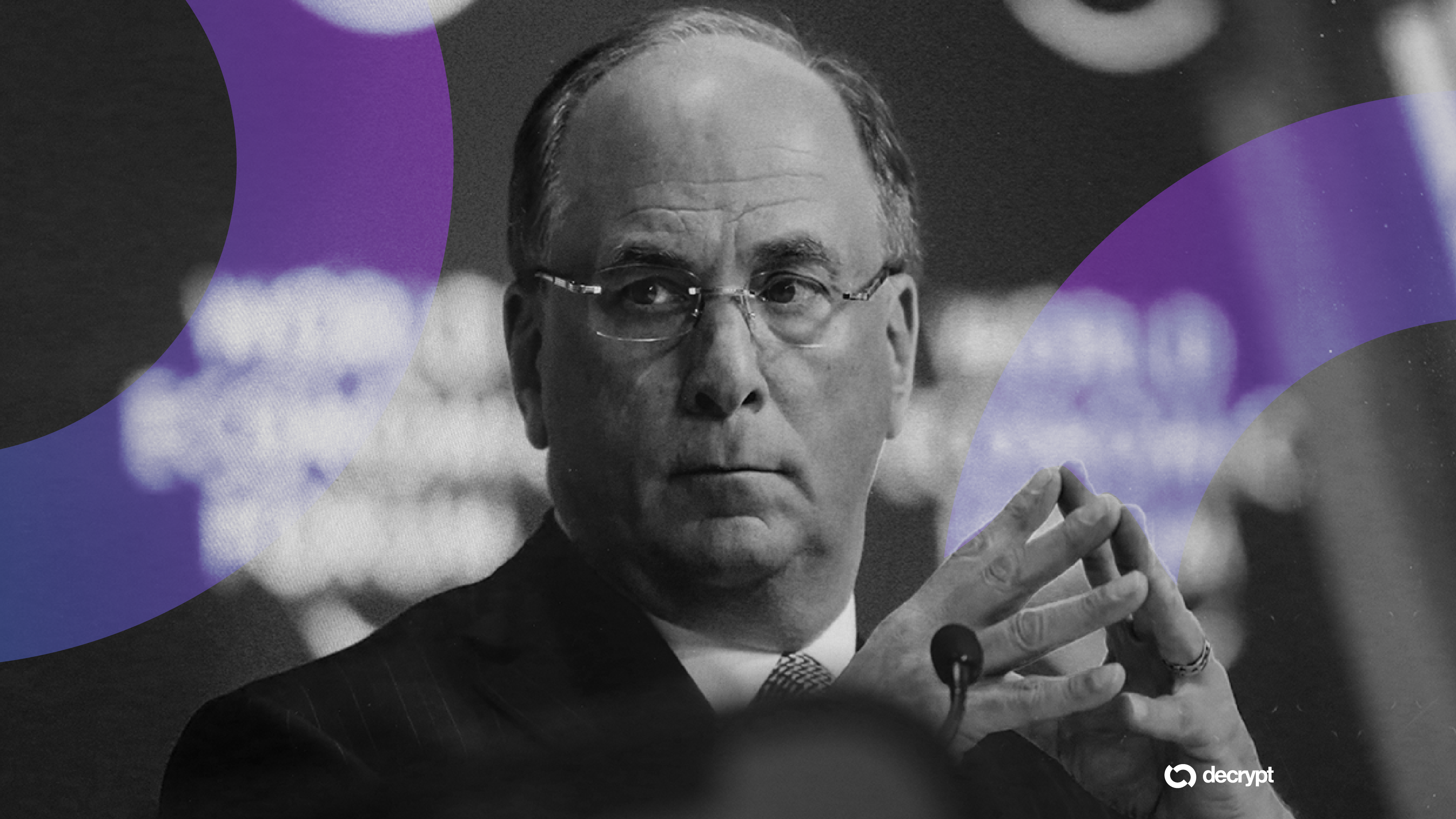
BlackRock Execs Declare Tokenization Poised to Redraw Global Market Infrastructure: A Bridge to the Next Financial Era
A compelling and SEO-optimized headline:
BlackRock’s Fink & Goldstein: Tokenization is the "Next Major Evolution" in Global Finance, Echoing Internet's 1996 Inflection Point
Introduction: The World's Largest Asset Manager Casts Its Vote
In a definitive signal of institutional conviction, BlackRock CEO Larry Fink and Chief Operating Officer Rob Goldstein have declared that blockchain-based tokenization is set to trigger the most significant overhaul of global market infrastructure since the 1970s. Writing in The Economist, the executives of the world’s largest asset manager positioned tokenization not as a speculative crypto trend, but as the foundational technology for finance’s future. They argue it will enable instantaneous settlement and dramatically expand the universe of investable assets by moving ownership records onto secure digital ledgers.
This pronouncement is not an isolated comment but a cornerstone of BlackRock’s strategic vision, echoing Fink’s 2022 statement that "the next generation for markets, the next generation for securities, will be tokenization of securities." The executives acknowledge that the technology’s promise was initially obscured by the noise of the crypto boom but insist its core utility—streamlining archaic processes and broadening access—is now coming into clear focus. However, they temper expectations of an overnight revolution, framing the shift as "a bridge being built from both sides of a river," connecting traditional finance with digital innovation.
From Speculative Noise to Core Infrastructure: Redefining the "Big Idea"
Beneath the Crypto Boom: Unearthing Utility
Fink and Goldstein candidly address the industry’s initial skepticism. “At first it was hard for the financial world—including us—to see the big idea,” they wrote, noting that tokenization “was tangled up in the crypto boom, which often looked like speculation.” This period, marked by volatile asset prices and narrative-driven investing, made it challenging for traditional institutions to separate technological signal from market noise.
The “big idea” they now champion is fundamentally about efficiency and accessibility. Tokenization digitizes the ownership record of real-world assets (RWAs)—stocks, bonds, real estate, private credit—onto a blockchain or digital ledger. This creates a verifiable, immutable, and programmable digital twin. The profound implication is the potential to replace what the executives describe as "manual processes, bespoke settlements and records that haven’t kept up with the rest of finance." By moving from fragmented, paper-based or siloed digital records to a unified ledger system, the entire lifecycle of an asset—from issuance and trading to settlement and servicing—can be streamlined.
The Promise: Instantaneous Settlement and an Expanded Investable Universe
Solving Finance's Persistent Frictions
The BlackRock executives pinpoint two transformative outcomes driven by this infrastructural shift:
Instantaneous Settlement: In traditional markets, settlement—the final exchange of payment for security—can take days (T+2 or longer). This delay, known as settlement risk or counterparty risk, ties up capital and creates operational complexity. Tokenization enables near-instantaneous "delivery versus payment" (DvP) on a common ledger. By settling transactions in minutes or seconds, it frees capital, reduces risk, and lowers costs for all participants.
Expanding Investable Assets: A significant portion of global wealth is locked in illiquid assets like real estate, fine art, or private equity. These markets are characterized by high barriers to entry, opaque pricing, and cumbersome transfer processes. Tokenization can fractionalize these assets, allowing them to be divided into smaller, more affordable digital shares. As Fink and Goldstein state, this “can greatly expand the world of investable assets,” democratizing access for a broader range of investors and providing asset owners with new liquidity avenues.
Fink emphasized this point on BlackRock’s Q3 2023 earnings call, citing real estate as a prime example where eliminating layers of intermediaries through tokenization could lower costs and improve affordability.
A Reality Check: "A Multi-Cycle Transition," Not an Overnight Revolution
The Bridge-Building Metaphor and Expert Caution
While bullish on the long-term trajectory, BlackRock’s leadership explicitly avoids hype about immediate disruption. They describe the process as "a bridge being built from both sides of a river," requiring collaboration between incumbent financial institutions and digital-native innovators.
This measured view is echoed by industry experts. Joshua Chu, lawyer and co-chair of the Hong Kong Web3 Association, told Decrypt that while BlackRock is "directionally right," their implied timing may be "over-compressed." He framed it as "a multi-cycle transition in which narrow, well-regulated use-cases will accrete over time, not a one-cycle revolution where everything is tokenized by next year."
Chu added a crucial criterion for adoption: “Tokenization only earns its keep when it solves a real problem that a plain-vanilla structure cannot.” Success will be driven by pragmatic solutions to specific pain points—reducing settlement risk in treasury management, improving collateral mobility in repo markets, or creating access to private market yields—rather than by technology for its own sake.
The Current Landscape: Rapid Growth from a Nascent Base
The "Internet in 1996" Stage
Fink and Goldstein provide critical context on the market's current scale: tokenized financial assets remain a tiny fraction of global equity and bond markets. However, they are “expanding quickly,” having grown roughly 300% in the 20 months preceding their article. They liken today’s stage to “the internet in 1996,” a period when foundational infrastructure was being laid and future giants like Amazon were in their infancy (noting Amazon had sold just $16 million worth of books at that time).
This growth is being tracked by platforms like RWA.xyz, which monitor the on-chain tokenization of treasury bills, bonds, private credit, and funds. The data reveals a market that is small but accelerating rapidly as major institutions launch pilot programs and live products.
BlackRock's Concrete Step: The BUIDL Fund as a Blueprint
Leading by Example in Tokenized Treasuries
BlackRock is not merely commenting from the sidelines; it is an active builder. The cornerstone of its public tokenization strategy is the BlackRock USD Institutional Digital Liquidity Fund (BUIDL). Launched in 2023 on the Ethereum network in partnership with Securitize, BUIDL offers qualified investors tokenized shares representing an interest in a fund holding U.S. Treasury bills and repurchase agreements.
The fund provides investors with the yield of traditional short-term Treasuries while leveraging blockchain for subscription, redemption, and transferability of shares. According to RWA.xyz data cited in the coverage, BUIDL has grown to approximately $2.3 billion in assets under management (AUM), positioning it among the largest single tokenized asset vehicles globally.
BUIDL serves as a practical blueprint for BlackRock’s vision. It demonstrates how a regulated financial product can utilize blockchain technology to offer secondary market liquidity features that are difficult to replicate in traditional fund structures. Fink’s call to action—“We need to be tokenizing all assets”—finds its first major expression here.
Strategic Conclusion: Watching the Infrastructure Take Shape
The declaration from BlackRock’s top executives is a watershed moment for tokenization. It moves the conversation from niche crypto circles into the boardrooms of global finance, providing immense legitimacy and signaling where institutional capital and development focus will flow.
For crypto-native readers and professional investors monitoring this space, several key takeaways emerge:
- Focus on Infrastructure Over Speculation: The narrative is decisively shifting from asset price speculation to underlying infrastructure utility. Projects solving for settlement efficiency, regulatory compliance (RegTech), and secure interoperability between legacy and new systems will be critical.
- Watch for Regulatory Clarity: As Joshua Chu indicated, well-regulated use cases will lead the way. Progress in jurisdictions like Hong Kong, Singapore, the EU with MiCA, and U.S. legislative efforts will create the guardrails enabling institutional deployment at scale.
- Track Real-World Asset (RWA) Protocols: The growth trajectory of treasury bills, private credit, and eventually more complex assets like real estate on chains will be a primary metric of adoption. Platforms facilitating issuance and providing liquidity for these tokens will be central.
- Understand It’s a Marathon: As emphasized by both BlackRock and independent experts, this is a multi-cycle transition. Expect gradual accretion of use cases rather than a sudden big bang. Setbacks and regulatory hurdles are part of the bridge-building process.
The final word belongs to Fink and Goldstein’s historical analogy: if today is truly “the internet in 1996” for tokenization, then we are at the very beginning of redrawing global market infrastructure. The companies building the protocols, compliance tools, and interoperability layers today are laying the groundwork for the financial ecosystem of the next decades. For observers and participants alike, the task is to monitor how this bridge gets built—one regulated use case at a time