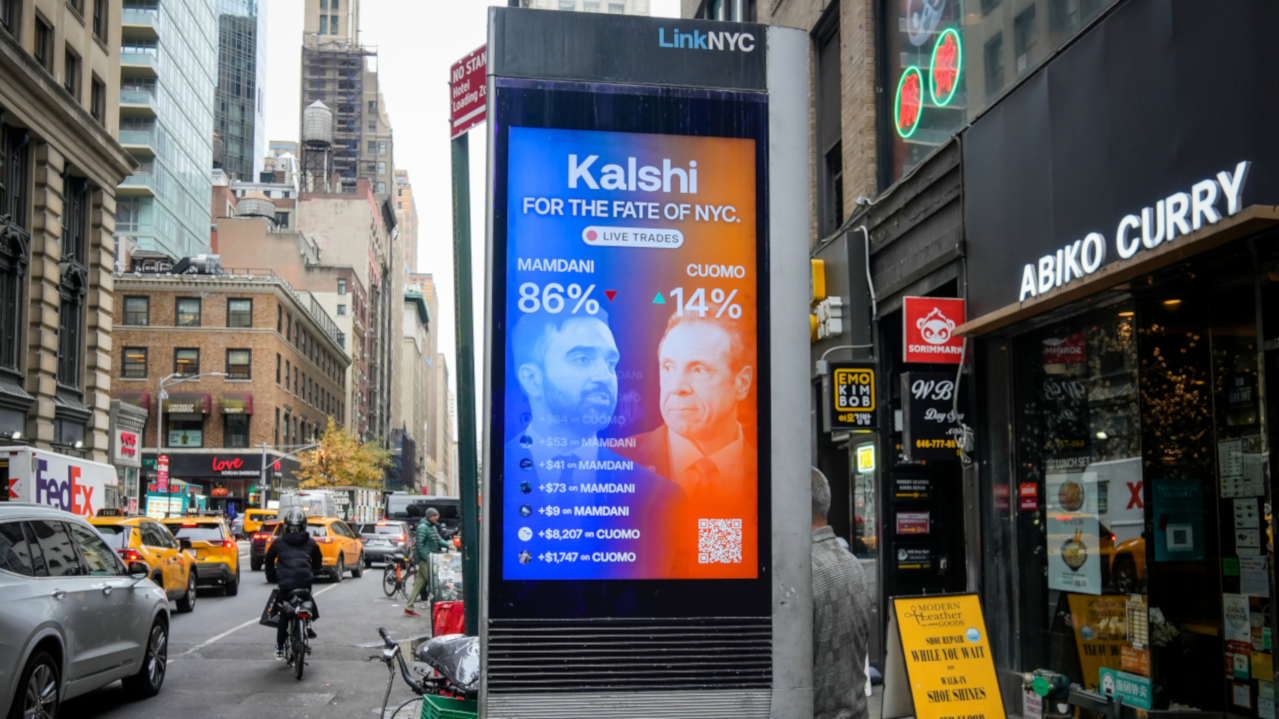
Kalshi's $11B Betting Platform Fights Nevada Regulators in High-Stakes Legal Appeal
Introduction
In a pivotal legal clash that underscores the growing tension between innovative financial platforms and established state regulatory frameworks, prediction market giant Kalshi is embroiled in a high-stakes appeal against Nevada regulators. Just before Thanksgiving, Kalshi suffered a significant setback when a Nevada district court judge dissolved a preliminary injunction that had shielded the company from state enforcement actions. This ruling immediately exposed the CFTC-licensed platform to potential legal jeopardy for its operations within Nevada. In response, Kalshi filed an emergency motion on November 25, seeking to maintain protective measures throughout its appeal process. The case represents a critical test for the burgeoning prediction market industry, which operates under federal derivatives law but faces mounting scrutiny from state authorities who view its activities as unlicensed gambling. With Kalshi's valuation soaring to $11 billion following a major funding round and competitors like Crypto.com opting for operational pauses, the outcome of this appeal will have profound implications for the future of event-based trading and its integration into the broader digital asset ecosystem.
The Core Legal Battle: Federal License vs. State Sovereignty
At the heart of Kalshi's dispute with the Nevada Gaming Control Board and Gaming Commission is a fundamental conflict over regulatory jurisdiction. Kalshi operates as a designated contract market (DCM) under the authority of the U.S. Commodity Futures Trading Commission (CFTC). This federal license permits it to offer event contracts—financial derivatives where users can take positions on the outcome of future events ranging from elections and economic indicators to cryptocurrency prices. Kalshi's central legal argument is that this CFTC designation preempts state gaming laws, allowing it to operate legally in all 50 states, including Nevada.
Nevada regulators vehemently contest this interpretation. They argue that Kalshi's markets, where users deposit funds to speculate on binary outcomes, functionally constitute sports betting or gambling, activities that fall squarely under Nevada's extensive and tightly controlled gaming regulatory apparatus. The state's position is that no entity may offer such wagering services within its borders without obtaining the requisite state gaming licenses. This clash came to a head when Judge James Gordon Jr., who had initially granted Kalshi a preliminary injunction against state enforcement in April 2024, later dissolved that protection in late November.
The state's November 26 court filing emphasized that while regulators would voluntarily hold off on enforcement while the court considers Kalshi's request for a stay pending appeal, this was not a judicial order. The regulators stated the "Gaming Control Board and Gaming Commission will not commence enforcement proceedings against Kalshi while the Court considers Kalshi’s request for a stay pending appeal." However, they coupled this with a firm stance on Kalshi's activities, arguing the company "has unreasonably refused to stop its unlawful activities in Nevada." The judge has since ordered an expedited briefing schedule, with state regulators responding by December 8 and Kalshi replying by December 12 before he renders a decision on the stay.
A Contrast in Strategies: Kalshi's Fight vs. Competitors' Pauses
The legal standoff in Nevada highlights divergent strategies among prediction market platforms when confronting state regulatory pushback. While Kalshi pursues an aggressive litigation path to establish its right to operate nationally under its CFTC license, other prominent players have chosen different approaches.
State regulators explicitly contrasted Kalshi's stance with that of its competitors in their recent filing: "[Kalshi] has unreasonably refused to stop its unlawful activities in Nevada, even while Crypto.com and Robinhood have entered into agreements with State Defendants to avoid enforcement pending appeal." This statement reveals a key tactical split within the industry.
Crypto.com’s affiliate, North American Derivatives Exchange (Nadex), which holds the necessary DCM license to offer prediction market contracts, has entered into an agreement with Nevada authorities to voluntarily pause its operations in the state pending the outcome of legal proceedings. Similarly, Robinhood has reportedly reached an accord with regulators. These moves suggest a more conciliatory, wait-and-see approach, potentially aimed at preserving long-term market access without engaging in costly and uncertain litigation.
Kalshi’s decision to fight, despite these precedents, underscores its confidence in its legal position and the strategic importance it places on maintaining uninterrupted service. It also reflects the company's significant growth trajectory; having secured a $1 billion fundraising round led by Sequoia Capital, which catapulted its valuation to $11 billion, Kalshi may possess greater resources to wage this legal battle than some competitors. Furthermore, as one of the sector's leaders alongside primary competitor Polymarket, establishing a favorable legal precedent could provide a durable competitive advantage.
The Stakes: Billions in Potential Market Growth
The intensity of this legal fight is proportionate to the enormous economic potential that industry analysts see in prediction markets. These platforms are not merely niche gambling sites but are increasingly viewed as sophisticated financial instruments that can aggregate crowd-sourced information to forecast event probabilities with remarkable accuracy.
An often-cited report from Certuity estimates that the global prediction market sector could balloon to $95.5 billion by 2035, expanding at a compound annual growth rate (CAGR) of 46.8%. This projected growth is fueled by increasing mainstream acceptance, technological advancement, and integration with cryptocurrency and decentralized finance (DeFi) ecosystems.
For crypto-native readers, the relevance is direct. Prediction markets like Kalshi and Polymarket frequently feature event contracts centered on cryptocurrency prices, blockchain protocol upgrades, DeFi metrics, and non-fungible token (NFT) sales volumes. They serve as both hedging tools and speculative instruments for crypto participants. A favorable ruling for Kalshi would solidify the legal standing of such crypto-linked event contracts within the United States, potentially unlocking significant capital and user engagement from traditional finance into crypto-adjacent derivatives.
Conversely, a defeat could embolden other states to follow Nevada’s lead, creating a patchwork of regulations that would fragment the U.S. market and stifle innovation. It could also push more prediction market activity onto fully decentralized, blockchain-based platforms like Polymarket, which may operate with less regard for specific geographic regulations but also with less direct oversight and consumer protection.
Historical Context and Regulatory Precedent
The current confrontation is not an isolated incident but part of a longer-running debate over how to classify and regulate novel financial products that blur traditional lines. The CFTC’s authority over event contracts stems from its mandate to regulate derivatives based on "excluded commodities," which can include economic indicators or other commercial measures. Over the past decade, the CFTC has cautiously allowed certain prediction markets to operate as DCMs, viewing them as tools for price discovery and risk management rather than pure gambling.
However, state regulators have historically guarded their jurisdiction over gambling fiercely. Nevada, with its deeply entrenched and economically vital gaming industry, represents perhaps the most formidable challenger. The state's argument hinges on protecting its regulated gaming industry from unlicensed competition and safeguarding consumers from what it may perceive as less rigorously overseen betting products.
This conflict mirrors earlier tensions in other fintech sectors. The rise of daily fantasy sports (DFS) platforms like DraftKings and FanDuel in the 2010s sparked similar nationwide legal battles over whether their contests constituted games of skill (exempt from gambling laws) or games of chance. Those disputes were largely resolved on a state-by-state basis through legislation and litigation, creating today’s complex regulatory mosaic for DFS.
Kalshi’s case could set a more sweeping precedent because it operates under an explicit federal license. The central question is whether that federal authorization nullifies state gaming laws under principles of federal preemption—a potentially more powerful legal argument than those available to earlier DFS companies.
What Crypto Readers Should Watch Next
The immediate timeline is clear: all eyes are on Judge James Gordon Jr.’s courtroom for his decision regarding Kalshi’s request for a stay pending appeal, expected after briefs are submitted by December 12. His ruling will determine whether Kalshi can continue operating in Nevada during what could be a lengthy appeals process or if it must cease operations there immediately.
Beyond this specific case, crypto professionals and enthusiasts should monitor several related developments:
- Actions by Other States: Whether regulators in other states with strong gaming interests—such as New Jersey or Pennsylvania—initiate similar enforcement actions against CFTC-licensed prediction markets.
- The CFTC’s Stance: Any public statements or actions from the CFTC defending its jurisdictional authority and the legitimacy of event contracts offered by its licensed DCMs.
- Competitor Movements: How platforms like Polymarket, which operates globally with a crypto-focused user base, adjust their strategies in response to U.S. regulatory pressures.
- Legislative Activity: Potential moves in Congress to clarify the jurisdictional boundaries between the CFTC and state authorities concerning prediction markets, especially as they relate to crypto-events.
Strategic Conclusion: A Defining Moment for Prediction Markets
Kalshi's appeal against Nevada regulators is more than a single company's legal dispute; it is a defining moment for the entire prediction market industry and its intersection with cryptocurrency. The outcome will critically influence whether these platforms are governed as nationwide financial markets under federal oversight or as state-licensed gambling operations.
A victory for Kalshi would affirm a expansive view of CFTC preemption, paving a clearer regulatory path for innovation in event-based derivatives and strengthening the bridge between traditional finance mechanisms and crypto-native concepts like decentralized oracle networks and on-chain speculation. It would likely accelerate institutional interest and investment in the sector.
A victory for Nevada regulators would signal that even federal licensure may not override potent state gaming laws, forcing prediction markets to navigate a complex, multi-state regulatory gauntlet or avoid offering contracts perceived as "gambling" in restrictive jurisdictions. This could incentivize further migration of activity to decentralized platforms operating outside traditional regulatory perimeters.
For the crypto community engaged in trading, governance, or building in Web3, this case underscores the persistent regulatory uncertainty facing hybrid models that combine financial innovation with speculative elements. It serves as a reminder that technological disruption inevitably collides with established legal frameworks, and that these collisions often determine which business models thrive and which are constrained. As billions in potential market value hang in the balance, Kalshi's high-stakes legal appeal is a battle worth watching closely