Stablecoin Proliferation Hits 370 as Regulatory Clarity Sparks Diversity Debate
Introduction: The New Stablecoin Gold Rush
The stablecoin landscape is undergoing an unprecedented expansion, with data aggregator CoinGecko now listing a staggering 370 distinct stablecoin tokens. This proliferation is largely driven by recent regulatory developments, notably the US CLARITY Act, which has provided clearer guidelines for issuers. The market is witnessing a rush of new entrants, including major financial institutions and fintech companies like US Bank, Klarna, and Revolut, all testing or launching their own digital dollar-pegged assets.
However, this boom presents a complex new reality for the crypto ecosystem. These 370 tokens are far from interchangeable; they are divided into distinct categories—fiat-backed, crypto-backed, and algorithmic—each carrying vastly different risk profiles. While demand for digital dollars remains dominant, the sheer variety threatens to create confusion for retail users who may not understand the critical differences in each coin's underlying collateral. This surge underscores stablecoins' role as a linchpin for crypto markets, a status cemented by Tether's USDT, which has seen its market capitalization grow an astounding 170,600% from $108 million during the July 2017 bull run to approximately $184 billion today.
Stable But Not Equal: The Three Pillars of Collateral
The primary function of the vast majority of stablecoins is to maintain a peg to the US dollar, providing global access to American currency. Yet, their architectural foundations differ significantly. As Ryne Saxe, CEO of Eco, explained, “There are different types of stablecoins, largely categorized by the collateral backing them. Those backed by real-world assets, like fiat currency or treasuries, those backed by cryptoassets, and other so-called ‘algorithmic’ stablecoins that have no collateral backing.”
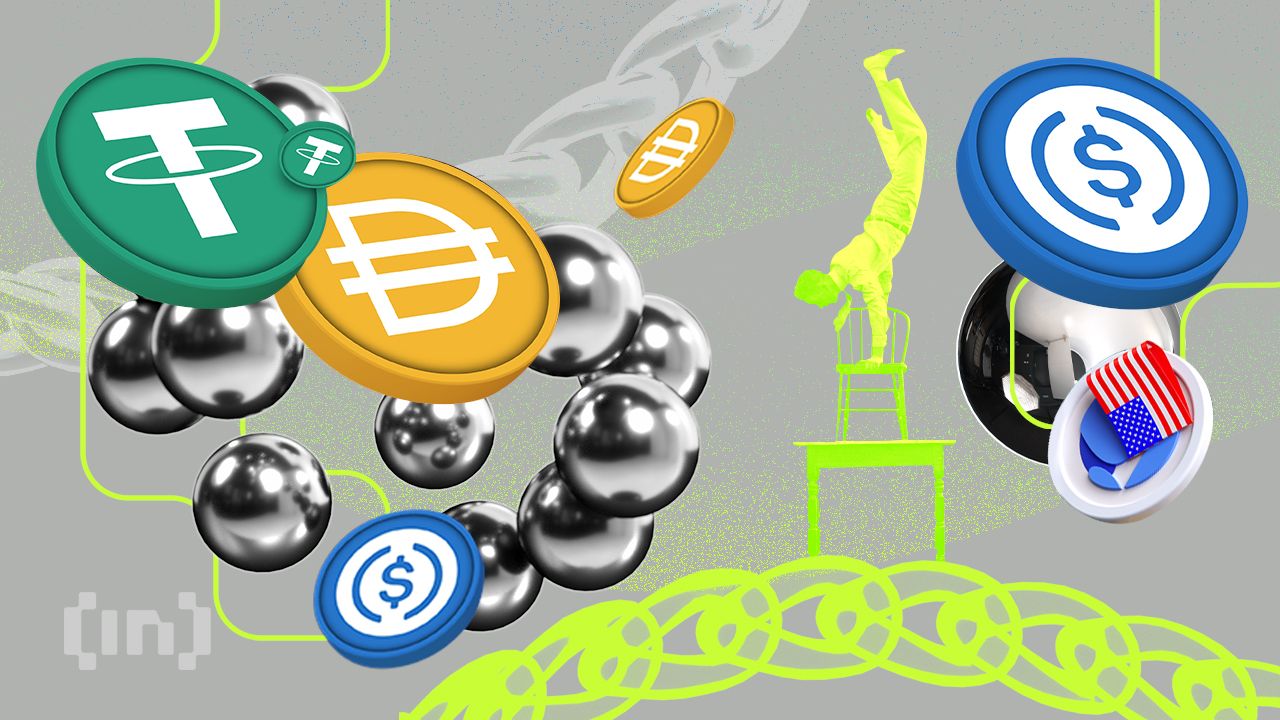
Fiat-backed stablecoins are by far the most popular and dominant category. Examples include Tether (USDT) and USD Coin (USDC), which are purportedly backed by reserves such as U.S. Treasuries and cash. Together, USDT and USDC command a combined market capitalization of $404 billion, representing the overwhelming majority of the stablecoin market's value.
Crypto-backed stablecoins represent a different approach. An example is Sky, formerly known as MakerDAO, which uses a diversified basket of blockchain-based assets as its collateral. This model introduces a different risk dynamic, as its stability is tied to the volatility of the underlying crypto assets.
The third category, algorithmic stablecoins, operates without traditional collateral. Instead, they use complex financial mechanisms to maintain their peg. Ethena’s USDe, for instance, employs a "delta-neutral" strategy that involves hedging crypto positions with short derivatives contracts. While there are also commodity-backed stables like Tether Gold, they constitute a much smaller subsection of the overall market.
Boris Bohrer-Bilowitzki, CEO of Concordium, summarized the core aim of these assets: “The aim of stablecoins isn’t to replace the US dollar or any other currency, but to digitize it and bring those benefits to a wider audience. For retail, they offer an infinitely better user experience – you simply buy and hold, without any requirement for extensive financial or trading knowledge.”
A Gaggle of Stablecoins: Proliferation and Inherent Risks
For the average retail user, the current explosion of stablecoins presents a significant challenge: navigating a market with hundreds of options that are not created equal. Beyond the fundamental differences in collateralization, these assets are also spread across numerous blockchain networks, adding another layer of complexity.
The entry of major corporate players further accelerates this trend. US Bank is testing a stablecoin on the Stellar blockchain. Klarna is launching one on Tempo, a new payments-based chain championed by Stripe. Meanwhile, Revolut is working to test stablecoins on Polygon. This cross-chain compatibility, while increasing utility, also introduces additional risks that users must consider.
Rebecca Liao, CEO of Saga, highlighted these concerns: “Stablecoins introduce new dynamics that differ from traditional off-chain digital dollars. Because they’re digital, programmable, and often on public blockchains, there’s exposure to smart contract bugs, liquidity shocks, and runs if confidence falters.”
Recent history provides clear examples of these vulnerabilities. The collapse of Silicon Valley Bank in 2023 triggered a panic when $3.3 billion of Circle’s reserves became temporarily inaccessible. Konstantins Vasilenko, Co-Founder at Paybis, noted, “It recovered in days, but that’s the kind of event that shakes confidence.”
Algorithmic stablecoins have demonstrated particularly acute risks. The implosion of the Terra Luna ecosystem in 2022 serves as a stark reminder. Vasilenko added, ”Algorithmic stablecoins are definitely riskier, which Terra effectively proved when $40 billion vanished almost overnight.” This event underscored how fragile certain stablecoin models can be under stress.
The People Want Bucks: The Driving Force Behind Dollar-Denominated Demand
Despite the inherent risks, the momentum behind stablecoin development shows no signs of slowing. The potential benefits—creating a global, seamless market for dollar movement that can accelerate cross-border transactions—are too significant for financial incumbents to ignore. For many of these institutions, stablecoins offer a solution to bypass often cumbersome traditional banking infrastructure and compliance hurdles for international money movement.
The dominance of the US Dollar in global finance is the fundamental driver here. It is the world's most commonly converted currency and a benchmark in the Forex market. Eleven foreign countries, territories, and municipalities officially use the USD. Dollar-denominated stablecoins extend this hegemony into the digital realm, processing a whopping $94 billion in daily trading volume.
This creates substantial economic activity within crypto markets. There is significant money to be made through arbitrage and moving stables between different DeFi protocols and exchanges. The success of DeFi stablecoin trading protocols like Curve Finance (not "Curv" as previously misstated) illustrates this demand; its ecosystem holds significant value and its governance token has demonstrated resilience even during broader market downturns.
For traders, this proliferation is beneficial, providing more avenues and liquidity for moving capital across exchanges. For the average person, however, the variety can be confusing if they are unaware of the assets underpinning their chosen stablecoin.
Konstantins Vasilenko from Paybis offered a perspective on end-user experience: “Honestly, most people won’t know they’re using stablecoins, and that’s the point. The best payment experiences are invisible. You tap your card, the money moves, and you don’t think about what’s happening in the background.”
Strategic Conclusion: Navigating a Fragmented yet Critical Market
The arrival of 370 stablecoins marks a critical inflection point for the cryptocurrency industry. Regulatory clarity has undeniably acted as a catalyst, inviting both traditional finance giants and innovative startups to compete in digitizing the world's primary reserve currency. This competition fuels innovation and expands access to digital dollars, solidifying their role as the essential plumbing of crypto markets.
However, this rapid growth comes with a responsibility for both users and the industry. The market is no longer simple; it is fragmented by collateral type, blockchain base, and issuer credibility. The historical precedents of Silicon Valley Bank's temporary lockup of reserves and the catastrophic failure of Terra Luna are not abstract warnings—they are concrete events that outline the spectrum of risks present.
For readers and market participants navigating this new era due diligence is paramount.
- Watch Regulatory Developments: The implementation of frameworks like the CLARITY Act will continue to shape which projects thrive and which falter.
- Scrutinize Collateral: Understanding whether a stablecoin is fiat-backed, crypto-backed, or algorithmic is no longer optional—it is essential for risk assessment.
- Monitor Institutional Adoption: The entrance of entities like US Bank and Revolut signals a new phase of maturity but also increases competitive pressure on existing players.
The future of stablecoins lies not just in their number but in their resilience, transparency, and utility. As this sector matures from a niche crypto tool into a foundational component of global finance,the debate sparked by its diversity will ultimately lead to stronger standards and a more robust ecosystem for all participants.
Disclaimer: Following the Trust Project guidelines, this feature article presents opinions and perspectives from industry experts or individuals. This article is dedicated to transparent reporting,but the views expressed do not necessarily reflect those of the author or its staff.Readers should verify information independently and consult with a professional before making decisions based on this content